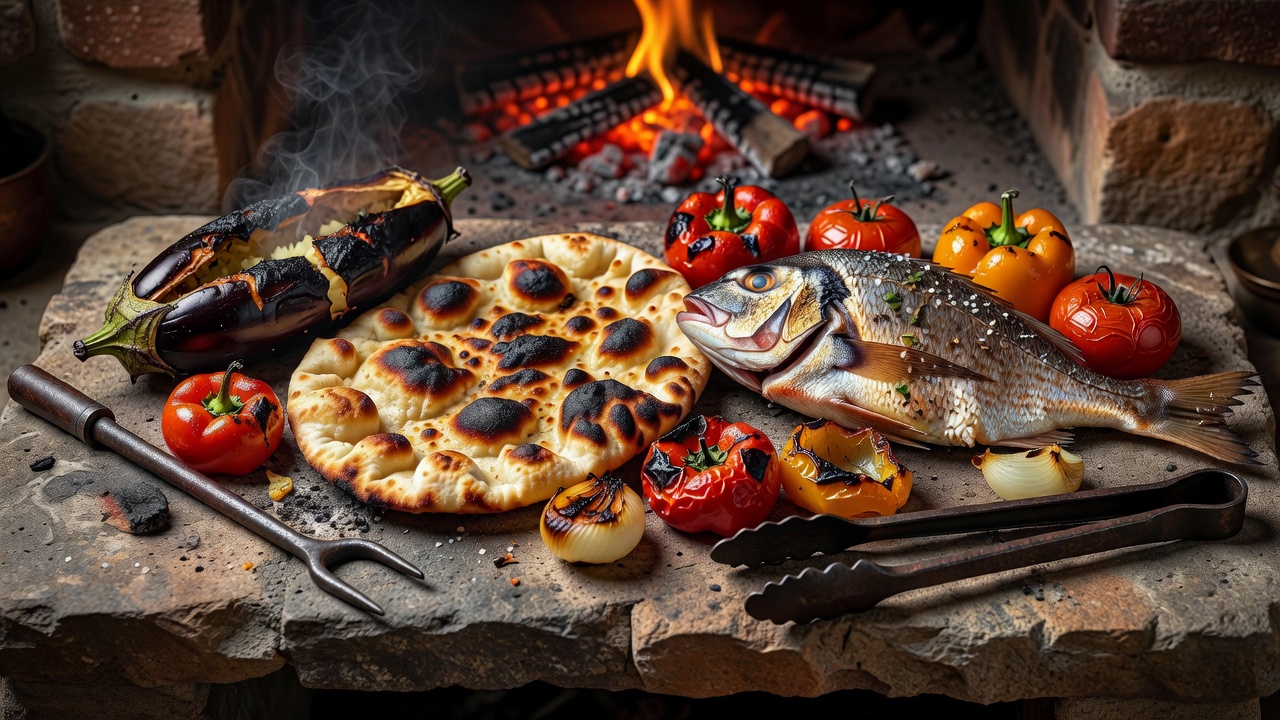
 Produce, Sea & Grain
Vegetables: Natural Skins as Pressure Chambers
Unlike thick cuts of beef, watery vegetables rarely want prolonged indirect smoking; they dry out before caramelizing. Mediterranean fire cooks turn the vegetable’s own skin into a sacrificial steam chamber. Take Catalan escalivada—named from escalivar, meaning to roast in embers. Whole purple eggplants, sweet red capsicums, and unpeeled yellow onions go directly onto white-grey ash or low grates. As the outer cellulose chars black, internal moisture vaporizes, collapsing bitter tannins and concentrating natural fructose.
Once pulled from the coals and rested briefly under a cloth, the blackened skin slides off in ribbons, leaving smoky, custard-soft flesh ready for cold-pressed olive oil and flaky sea salt. The same alchemy underpins Levantine baba ganoush and Tunisian salade méchouia. Meanwhile, denser roots—celeriac, sweet potatoes, and winter squash—benefit from full ash burial, while young spring artichokes and wild asparagus prefer brief high heat near the flame edge so outer bracts crisp like chips around a tender heart.
Coastal Fish & Shellfish: Moisture Protection
Fish has thin muscle fibres and almost no tough collagen, meaning prolonged heat quickly wrings it dry. Yet Mediterranean fire kitchens prize whole grilled sea bream (dorade), red porgy, turbot, and sardines precisely because dry infrared radiation sets the exterior faster than any domestic pan.
Three habits protect coastal catch over open coals: leaving scales intact or scoring sparingly, keeping bones inside the body cavity to buffer heat, and using hinged wire baskets or V-channel grates coated lightly in olive oil. High initial radiation—around 360°C—flash-dehydrates surface moisture within the first minute, creating a crisp savoury barrier before internal juices escape. Shellfish such as razor clams, mussels, and gambas cook even faster: cast-iron plancha skillets set right atop the embers bounce conductive heat through the shell so meat poaches in its own brine while catching faint wood aroma.
Flatbreads & Hearth Loaves: Steam Flash & Stone
Wheat dough reveals immediately whether an oven or stone slab holds true thermal mass. On a taboon’s heated pebbles, inside a tannour, or across the brick deck of a forno a legna, 70%-hydration dough meets stone exceeding 380°C. Moisture in the dough’s lower layer flashes instantly into steam, inflating air pockets into puffy, leopard-spotted blisters while Maillard browning locks in nutty wheat sweetness within two minutes.
By contrast, thin unleavened or lightly leavened dough rolled onto an inverted metal saj dome cooks in thirty seconds—flexible enough to wrap hot lamb skewers straight off the mangal and absorb spiced juices without tearing.
Pasture Meats: Fat Rendering & Herb Embers
Mediterranean livestock—particularly mountain lamb, kid goat, and acorn-fed pork—carries flavourful fat deposits that respond dramatically to height changes above charcoal. Rather than searing ribs at constant scorching heat, skilled cooks start fatty cuts higher above the embers so intramuscular fat melts slowly, basting the lean meat from within, then drop the grate close to glowing coals for the final ninety seconds to blister the exterior. Toss a sprig of dried rosemary, wild thyme, or bay leaves onto spent ash right before plating and volatile essential oils perfume the crust without turning acrid.
| Ingredient Class | Ideal Heat Method | Target Crust / Finish | Classic Finishing Touch |
|---|---|---|---|
| Whole Eggplant & Peppers | Direct ash or low ember grate | Blistered husk, collapsed silk flesh | Raw olive oil, tahini, pomegranate, or garlic |
| Whole Sea Bream / Sardines | Hinged basket or V-grate at 350°C | Crisp dehydrated skin, translucent flake | Lemon juice, oregano salmoriglio, flaky salt |
| Leavened Flatbread (Lafa / Pita) | 380–450°C clay floor or wall | Leopard char spots, hollow steam pocket | Brushed with za'atar oil or garlic butter |
| Lamb Ribs & Shoulder | High slow elevation, then close sear | Rendered crackle, pink juicy interior | Sumac, cumin salt, or rosemary-infused ash |